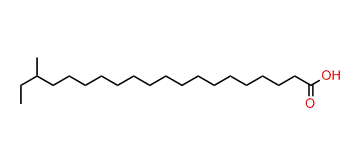
| 18-Methyleicosanoic acid |
| Formula: | C21H42O2 |
| CAS#: | 36332-93-1 |
| MW: | 326.56 |
[MS]
|
|
Species utilize 18-Methyleicosanoic acid in its chemical communication system
| Axinellida, Heteroxyidae | |
| Myrmekioderma styx |
P
¦Category of the chemical signal
| A - | Attractant |
| Al - | Allomone |
| K - | Kairomone |
| P - | Pheromone |
| Sy - | Synomone¦ |
|
¦(*) indicates that compound is active¦
|
|
| |
| Chondrosiida, Chondrosiidae | |
| Chondrosia reniformis |
P
¦Category of the chemical signal
| A - | Attractant |
| Al - | Allomone |
| K - | Kairomone |
| P - | Pheromone |
| Sy - | Synomone¦ |
|
¦(*) indicates that compound is active¦
|
Kidney sponge |
| |
| Poecilosclerida, Desmacididae | |
| Desmapsamma anchorata |
P
¦Category of the chemical signal
| A - | Attractant |
| Al - | Allomone |
| K - | Kairomone |
| P - | Pheromone |
| Sy - | Synomone¦ |
|
¦(*) indicates that compound is active¦
|
Pink rope sponge |
| |
| Suberitida, Suberitidae | |
| Suberites massa |
P
¦Category of the chemical signal
| A - | Attractant |
| Al - | Allomone |
| K - | Kairomone |
| P - | Pheromone |
| Sy - | Synomone¦ |
|
¦(*) indicates that compound is active¦
|
|
| |
| Carnivora, Otariidae, Arctocephalinae | |
| Arctocephalus pusillus |
P
¦Category of the chemical signal
| A - | Attractant |
| Al - | Allomone |
| K - | Kairomone |
| P - | Pheromone |
| Sy - | Synomone¦ |
|
¦(*) indicates that compound is active¦
|
South African fur seal |
| |
| Diprotodontia, Macropodidae, Macropodinae | |
| Macropus agilus |
P
¦Category of the chemical signal
| A - | Attractant |
| Al - | Allomone |
| K - | Kairomone |
| P - | Pheromone |
| Sy - | Synomone¦ |
|
¦(*) indicates that compound is active¦
|
Agile wallaby |
| |
| Eulipotyphla, Erinaceidae, Erinaceinae | |
| Erinaceus europaeus |
P
¦Category of the chemical signal
| A - | Attractant |
| Al - | Allomone |
| K - | Kairomone |
| P - | Pheromone |
| Sy - | Synomone¦ |
|
¦(*) indicates that compound is active¦
|
West European hedgehog |
| |
| Lagomorpha, Leporidae, Leporinae | |
| Oryctolagus cuniculus |
P
¦Category of the chemical signal
| A - | Attractant |
| Al - | Allomone |
| K - | Kairomone |
| P - | Pheromone |
| Sy - | Synomone¦ |
|
¦(*) indicates that compound is active¦
|
European rabbit |
| |
| Carnivora, Ursidae, Ursinae, Ursini | |
| Ursus maritimus |
P
¦Category of the chemical signal
| A - | Attractant |
| Al - | Allomone |
| K - | Kairomone |
| P - | Pheromone |
| Sy - | Synomone¦ |
|
¦(*) indicates that compound is active¦
|
Polar bear |
| |
| Dasyuromorphia, Dasyuridae, Dasyurinae, Dasyurini | |
| Sarcophilus harrisii |
P
¦Category of the chemical signal
| A - | Attractant |
| Al - | Allomone |
| K - | Kairomone |
| P - | Pheromone |
| Sy - | Synomone¦ |
|
¦(*) indicates that compound is active¦
|
Tasmanian devil |
| |
| Diprotodontia, Phalangeridae, Phalangerinae, Trichosurini | |
| Trichosurus vulpecula |
P
¦Category of the chemical signal
| A - | Attractant |
| Al - | Allomone |
| K - | Kairomone |
| P - | Pheromone |
| Sy - | Synomone¦ |
|
¦(*) indicates that compound is active¦
|
Common brushtail possum |
| |
| Rodentia, Muridae, Murinae, Rattini | |
| Rattus norvegicus |
P
¦Category of the chemical signal
| A - | Attractant |
| Al - | Allomone |
| K - | Kairomone |
| P - | Pheromone |
| Sy - | Synomone¦ |
|
¦(*) indicates that compound is active¦
|
Brown rat |
| |
|